
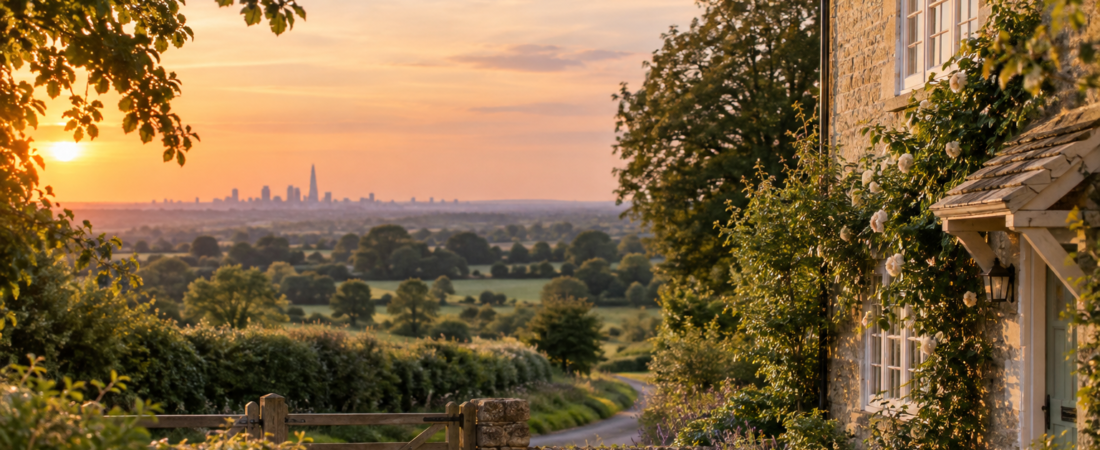
Moving from London to the countryside was something we thought about for a long time before actually taking the plunge.
Like a lot of people living in London, we loved the convenience, the restaurants, the shops and the fact there was always something going on. But over time, the idea of having more space, more greenery and a slightly slower pace of life became more and more appealing.
Eventually, we decided to make the move.
Now that we’ve actually done it, there are definitely a few things I wish I had known beforehand. Some have been lovely surprises, while others have taken a little more getting used to.
If you’re thinking about moving from London to the countryside, these are the things I would consider before you make the leap.
You need to be sure you actually want a quieter life
It sounds obvious, but countryside living isn’t just London with prettier views. The pace of life is genuinely different.
There are fewer places open late, less choice when it comes to restaurants and shops, and you can’t necessarily decide at 9pm that you fancy popping out for something and expect everything to be on your doorstep.
Before moving, we made a point of spending time in villages and countryside locations to make sure we actually liked that lifestyle rather than just liking the idea of it.
If you’re considering the move, I’d definitely recommend spending weekends in the sort of area you’re thinking about living in, and not just during summer when everything looks idyllic. Visit in winter too. Drive around in the dark. Go to the local shops. Try the commute. You want to know what everyday life feels like, not just what a weekend break feels like.
You’ll probably use your car much more
This was one of the biggest lifestyle changes. In London, we didn’t even own a car. Public transport could get me pretty much anywhere. In the countryside, having a car suddenly becomes much more important.
Even if you have a train station relatively nearby, you may still need to drive there. A supermarket might be 10 or 15 minutes away. The nearest pharmacy, gym, hairdresser or takeaway might be in another village or town. It isn’t necessarily a negative, but it is something to factor in.
When looking at houses, I would now always check:
- How far is the nearest supermarket?
- Where is the closest train station?
- Is there somewhere nearby for basic essentials?
- How easy is it to get a taxi?
- Is there parking at the station?
- How long does the journey into London realistically take door to door?
The last one is particularly important.
A house may technically be “40 minutes from London” by train, but once you add the drive to the station, parking, waiting for the train and travelling to your final destination, your actual commute can look very different.
Older houses come with surprises
One of the biggest attractions of moving out of London is, of course, getting more space. After London property prices, suddenly seeing houses with gardens, spare bedrooms and proper living spaces can feel unbelievable. But many countryside properties are also older.
Our house is a Grade II listed cottage, so there were quite a few things we had to think about that we never would have considered when living in a London flat. Older homes often come with quirks: Uneven floors, old beams, unusual layouts and walls that aren’t quite straight can all be part of the charm – but they can also make decorating, renovating and even buying furniture slightly more complicated. We have a spiral staircase in our cottage that has made getting certain bits of furniture upstairs a real challenge.
Surveys are incredibly important. If you’re buying an older property, particularly a listed building, I would definitely recommend getting a thorough survey and being prepared for maintenance costs that may not exist in a modern house.
A garden is wonderful but it is also work
Having a garden was something I was really excited about. After London, simply having your own outdoor space feels like such a luxury. What I hadn’t fully appreciated was how much there is to learn. Plants need pruning. Lawns need mowing. Weeds seem to appear overnight. Some plants love certain areas of the garden while others refuse to survive there. And if, like me, you have never really gardened before, there is a surprising amount to learn.
That said, it has also been one of the nicest parts of moving. Creating a garden slowly and seeing things grow makes the house feel more and more like home. My advice would be not to try to change everything immediately. Live with the garden for a while. See what grows in spring and summer before removing things, because plants that look completely dead in winter can suddenly become beautiful a few months later.
Village life is quieter, but it isn’t necessarily isolated
One thing I wondered about before moving was whether countryside living would feel lonely. London is constantly busy. Even if you aren’t actually speaking to anyone, there are always people around.
Village life is obviously very different. But in some ways, you actually become more aware of the people around you. You recognise neighbours. You see the same people walking their dogs. Local pubs, village events and community groups suddenly become much more relevant. It can feel more personal than living in a city.
Of course, every village is different, so I think it is worth researching the community as much as the property itself.
A beautiful house in the wrong location probably won’t make you happy.
You notice nature much more
This has probably been one of my favourite things about leaving London. You suddenly notice things you barely thought about before. Birdsong in the morning. Pheasants wandering around. Horses in nearby fields. Changing seasons. Flowers appearing in hedgerows. Even the weather feels more noticeable. When you’re surrounded by fields and trees, you become much more aware of the seasons changing.
There are downsides too – including more insects, muddy paths and the occasional unexpected animal visitor – but overall, being closer to nature has been one of the best parts of the move.
Your priorities change surprisingly quickly
Before moving, things like being close to a great restaurant or having shops within walking distance felt incredibly important. Now, I find myself getting excited about completely different things:
A beautiful countryside walk.
Finding a good local pub.
Watching something flower in the garden.
Discovering a farm shop.
Making the house cosier.
Your definition of convenience changes too. In London, convenience meant having everything five minutes away. In the countryside, it might mean having somewhere beautiful to walk straight from your front door.
I would still make the move
There have definitely been adjustments:
We drive more.
We plan journeys more carefully.
There are fewer shops nearby.
Owning an older house means there is always something that needs doing.
But for us, the things we gained have outweighed the things we gave up:
More space.
A garden.
Beautiful countryside.
A quieter environment.
And a home that feels completely different from the way we lived in London.