
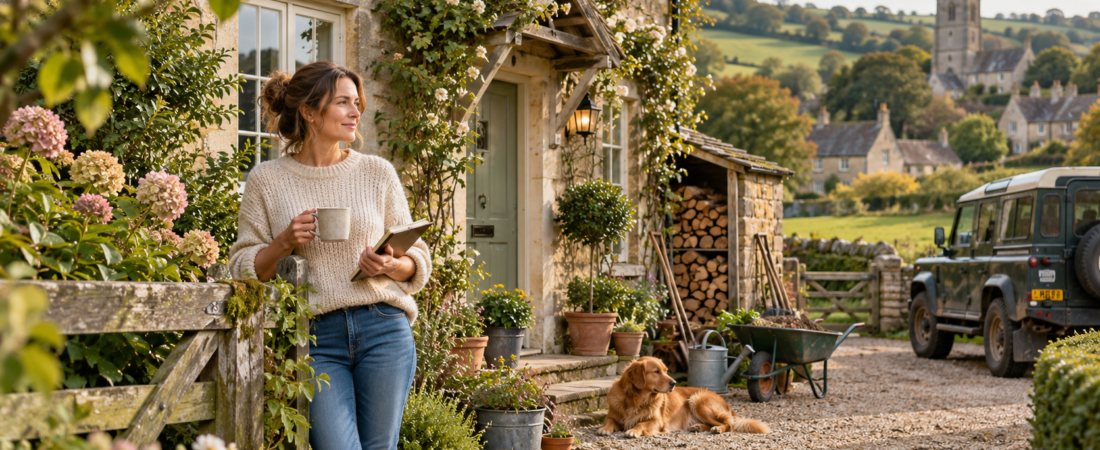
When we moved from London to the countryside, we were prepared for the obvious financial changes.
We knew we’d probably spend more on fuel. We expected an older house to need more maintenance. And we knew that moving somewhere rural would mean a slightly different way of living.
What we didn’t fully appreciate was just how many smaller costs come with country life.
None of them have made us regret the move — far from it — but they are definitely things I wish we’d thought about beforehand.
If you’re considering moving from a city to the countryside, these are some of the hidden costs of rural living that are worth budgeting for.
1. You Spend Much More on Fuel
This was probably the most predictable cost, but I still underestimated how quickly it adds up.
In London, so many everyday journeys simply didn’t require a car.
You could walk, take the Tube, jump on a bus or pick something up on the way home.
In the countryside, almost everything involves driving.
The supermarket, gym, train station, hairdresser, dentist, garden centre, takeaway collection and even meeting friends can all mean getting in the car.
A five-minute errand suddenly becomes a 20-minute round trip.
Individually, these journeys don’t feel significant, but over a month the fuel costs can really add up.
2. Taxis Can Be Surprisingly Expensive
One of the biggest adjustments for us has been transport after an evening out.
In London, you could usually get home relatively easily by public transport or a short taxi ride.
In the countryside, taxis can be more expensive because drivers often have to travel further just to collect you.
You may also need to book them in advance.
A nice dinner out can therefore come with an extra £30, £40 or more just to get there and back.
It doesn’t stop you going out, but it definitely becomes something you factor into the cost of the evening.
3. Train Station Parking
If you move somewhere rural but still commute into London, station parking can become a regular expense.
This is one I think people sometimes forget to include when comparing commuting costs.
You may have a train season ticket, but if the station isn’t within walking distance you could also be paying for:
- Daily parking
- Fuel to reach the station
- Occasional taxis
- Peak train fares
Suddenly the cost of commuting from the countryside looks slightly different.
4. Older Houses Need More Maintenance
One of the biggest attractions of moving to the countryside is often the houses.
Cottages, period homes, beams, fireplaces and original features are beautiful.
But character comes with maintenance.
Older properties can need more attention than newer houses, particularly when it comes to roofing, damp, timber, drainage, windows and insulation.
Even small jobs can become more expensive because they often need somebody with experience working on older buildings.
If you’re buying a listed cottage or period property, I’d definitely leave more money aside for ongoing maintenance than you think you’ll need.
5. Heating Can Cost More
Country homes are often older, larger and less energy-efficient.
That means heating them can be more expensive.
You may also find that the property isn’t connected to mains gas.
Depending on where you live, you could be using:
- Oil
- LPG
- Electric heating
- Wood burners
- A combination of systems
Heating oil, in particular, can mean paying a large amount in one go rather than receiving a predictable monthly gas bill.
It is definitely something I’d investigate carefully before buying a rural property.
6. Chimney Sweeping
If your dream of country living involves a fireplace or wood-burning stove, there are maintenance costs involved.
Chimneys need sweeping regularly, particularly if you’re using them throughout the winter.
You’ll also need to think about firewood, kindling and potentially servicing the stove itself.
None of these costs are enormous individually, but they are another expense that simply didn’t exist in our previous life.
7. Firewood Costs More Than You Think
Before moving to the countryside, I think I subconsciously imagined everyone just had piles of logs lying around.
Unfortunately, somebody still has to pay for them.
If you use a wood-burning stove regularly through autumn and winter, you’ll get through logs surprisingly quickly.
Buying kiln-dried firewood can become a noticeable seasonal expense.
And once you’ve started having cosy winter evenings by the fire, it’s very difficult to give them up.
8. Garden Maintenance
Having a garden was one of the things we were most excited about.
And I absolutely love having outdoor space.
But gardens cost money.
Plants, compost, tools, pots, lawn care, fencing and general maintenance all add up.
Then there are the bigger jobs.
Trees may need pruning.
Hedges need cutting.
Fences eventually need replacing.
If you have a large garden, you may even decide to hire a gardener.
A garden is absolutely worth it for us, but it’s definitely not free outdoor space.
9. Tree Work Can Be Expensive
This deserves its own point because I had no idea how expensive professional tree work could be.
Mature trees are one of the loveliest things about rural properties, but occasionally they need professional attention.
Large branches may need removing.
Trees may need reducing.
And if you live in a conservation area or own a listed property, there may be additional rules around what you can do.
Tree surgeons are skilled professionals, and bigger jobs can easily become a significant expense.
10. Rural Broadband and Mobile Solutions
Fast broadband is something we completely take for granted in cities.
In rural areas, it’s worth checking exactly what is available at the property rather than assuming.
If broadband speeds are poor, you may end up paying for alternative solutions such as:
- Mobile broadband
- Wi-Fi boosters
- Mesh systems
- Satellite internet
- Additional routers
If you work from home, reliable internet becomes even more important.
It’s one of those things that can become surprisingly expensive if the standard service isn’t good enough.
11. Septic Tanks and Private Drainage
Some rural properties aren’t connected to mains drainage.
Instead, they may have a septic tank or private treatment system.
This can mean additional maintenance and emptying costs.
It isn’t necessarily a problem, but it’s definitely something you should understand before buying the house.
Find out:
- What type of system it has
- How old it is
- How often it needs emptying
- Where it is located
- Who is responsible for maintaining it
These are costs you probably never have to think about when living in a London flat.
12. Deliveries Can Cost More
Living somewhere rural can occasionally mean paying extra for deliveries.
Some companies charge more for awkward or remote locations.
Others may refuse to deliver altogether.
Large furniture, building materials and garden items can sometimes come with additional charges.
Even takeaway delivery options can be limited enough that you end up collecting food yourself.
It isn’t a huge cost, but it’s another small difference that adds up.
13. Tradespeople May Charge More for Travel
If you live in a small village, tradespeople may be coming from another town.
That can occasionally mean higher call-out charges or travel costs.
You may also have fewer people to choose from locally.
This can be particularly noticeable when you need somebody with specialist skills.
For older houses, you may need a carpenter, roofer, plumber or builder who understands traditional properties.
Those specialists can be both harder to find and more expensive.
14. Eating Out Can Become a Bigger Event
This might sound odd, but moving to the countryside can subtly change the cost of eating out.
In London, we might casually go somewhere nearby.
In the countryside, dinner can mean:
- Driving somewhere
- Paying for parking
- Getting a taxi
- Travelling further
- Turning it into more of an occasion
The meal itself might not be more expensive, but the total cost of the evening can be.
On the positive side, we probably value those evenings more.
And a really good country pub is difficult to beat.
15. You Suddenly Want to Buy Things for the House
This may be the least essential hidden cost, but it’s probably one of the most dangerous.
Moving to the countryside made me want to make our home feel even more like a country home.
Suddenly I wanted:
- Antique furniture
- Rugs
- Lamps
- Artwork
- Garden furniture
- Outdoor pots
- Flowers
- Baskets
- Throws
- Old books
- Fireplace accessories
Once you have a cottage or period home, there always seems to be another corner you want to make cosier.
Obviously, none of this is compulsory.
But if you enjoy interiors, I’d probably add a “things I definitely don’t need but will buy anyway” category to the moving budget.
Are the Hidden Costs of Country Living Worth It?
For us, yes.
There are definitely additional expenses that come with living in the countryside.
We drive more.
Our house requires more maintenance.
Some everyday errands are less convenient.
And there are costs that simply didn’t exist when we lived in London.
But the trade-off is having more space, more peace and a lifestyle that suits us much better now.
After living in London for more than ten years, I was very ready for the change.
Being able to step outside and immediately be surrounded by countryside still feels like a luxury.
For me, that is worth budgeting a little more for.
What Should You Budget for Before Moving to the Countryside?
If you’re thinking about making the move, I’d recommend looking beyond the mortgage or purchase price and estimating your new monthly lifestyle costs.
Think about:
- Fuel
- Car maintenance
- Station parking
- Taxis
- Heating
- Garden maintenance
- Chimney and fireplace costs
- Broadband
- Private drainage
- Home maintenance
- Tradespeople
- Tree work
It doesn’t mean the countryside is necessarily more expensive overall.
You may save money in plenty of other areas.
But it’s helpful to understand where your spending might shift.
Final Thoughts
One thing I’ve realised since moving is that the biggest difference between city and country living isn’t necessarily how much you spend.
It’s what you spend your money on.
In London, more of our spending naturally went towards transport, restaurants and the endless things happening around us.
In the countryside, more of it goes into our home, garden, car and the practicalities of rural life.
Personally, I prefer it.
The countryside certainly isn’t a cheaper, simpler life in every respect.
But for us, the peace, space and slower pace of life have made the hidden costs worth it.