
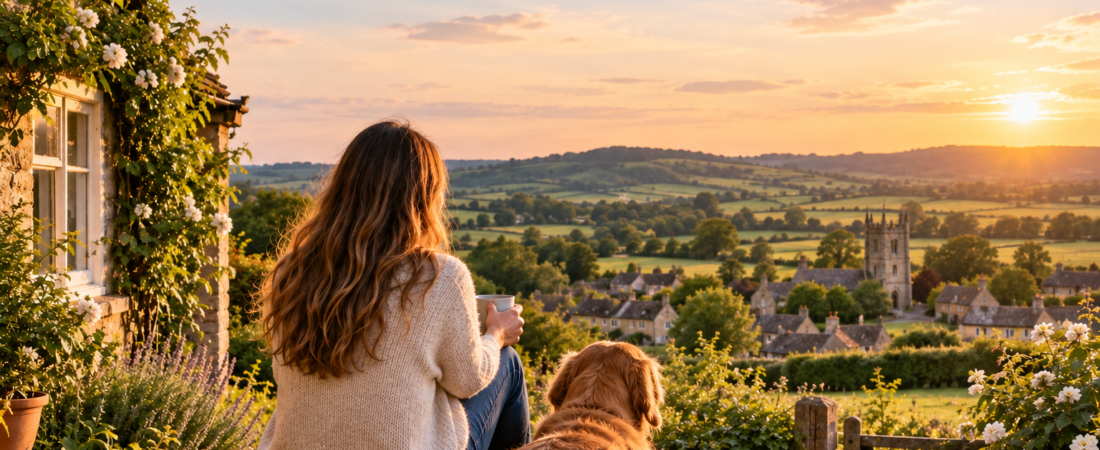
For years, moving to the countryside felt like something people did later in life. You spent your twenties and thirties in the city, built your career, enjoyed restaurants, bars and busy weekends, and then eventually swapped it all for a cottage, a garden and a quieter pace of life.
But does it really have to happen in that order?
I moved from London to the countryside in my late thirties, after living in the city for more than ten years, and by the time we made the move I felt completely ready for it.
I still loved London, and there are certainly things I miss about city life, but my priorities had changed. Rather than wanting to be surrounded by endless restaurants, shops and things happening every night, I found myself craving space, greenery, peace and the ability to step outside the front door and immediately feel somewhere calmer.
If you’re thinking about moving to the countryside in your 30s, here’s what I think you should expect — including the positives, the negatives, the personality types that tend to suit rural living, and whether you might ever regret leaving city life behind.
Is Your 30s Too Young to Move to the Countryside?
In my opinion, absolutely not.
There probably isn’t a “right” age to move to the countryside. It has much more to do with where you are in life and what you enjoy.
Some people thrive on city life well into their sixties. Others start craving something quieter at 30.
After more than a decade in London, I felt that I’d experienced city life properly. I had enjoyed having everything on my doorstep, being able to meet friends easily, going out for dinner at short notice and living somewhere that always felt busy.
But eventually the things I valued began to change.
The constant noise and crowds became less exciting. I wanted more space. I wanted somewhere greener. And instead of wanting hundreds of restaurants nearby, having a lovely country pub, beautiful walks and a peaceful home suddenly sounded far more appealing.
If you are already finding yourself looking forward to quiet weekends rather than worrying that you’re missing out on something, countryside life might suit you sooner than you think.
Moving From London to the Countryside: What Changes Most?
One of the biggest things I noticed after moving from London to the countryside was how different everyday life feels.
In London, convenience is everywhere.
You can walk to shops, restaurants and cafés. Public transport runs constantly. There is always something happening and, if you change your plans at the last minute, there are usually dozens of alternatives.
Countryside living is different.
You tend to plan more.
You may drive to the supermarket rather than walk. You may book taxis in advance. You may choose between two or three favourite local pubs rather than hundreds of restaurants.
But what you gain is a very different pace of life.
For me, that trade-off has been completely worth it.
What Is Living in the Countryside Actually Like?
Country living is often presented as an idyllic mixture of cottages, village pubs, countryside walks and sunny gardens.
And, to be fair, those things are genuinely part of it.
But everyday countryside living is also very different from visiting somewhere rural for the weekend.
One of the biggest changes is simply how quiet everything becomes.
After living in London for more than ten years, this was one of the things I noticed immediately — and one of the things I loved most.
There aren’t people constantly walking past your house. You don’t hear buses, traffic and sirens throughout the day. Evenings can become incredibly peaceful.
For me, that was exactly what I wanted.
But that quietness could feel completely different to somebody who loves being surrounded by people and activity.
You also become much more dependent on planning.
In London, if you forget milk you can normally walk a few minutes and buy some. In the countryside, the nearest proper shop might involve getting in the car.
Getting a takeaway can be more difficult. Public transport may be limited. A quick taxi home after dinner isn’t necessarily quite so quick.
None of these things are major problems, but they do require a slight change in mindset.
Is Country Living Boring?
This is probably one of the biggest worries people have before moving.
And I think the answer depends almost entirely on what you consider entertaining.
If you love being able to walk out of your front door and choose between bars, restaurants, theatres, shops and events every night of the week, then yes, rural life might feel quiet.
But if your idea of a good weekend has already started changing, it may feel like the opposite.
Country living can mean:
- Long walks straight from home
- Sunday roasts in country pubs
- Gardening
- Exploring nearby villages
- Having friends over
- Decorating and improving your home
- Visiting farmers’ markets
- Spending more time outside
- Sitting in the garden on a summer evening
- Going somewhere without feeling constantly rushed
I don’t personally find country living boring.
If anything, I find the slower pace more enjoyable because I was ready for it.
The important question isn’t really “Is the countryside boring?”
It’s “Would I find this lifestyle boring?”
Those are two very different things.
The Positives of Moving to the Countryside in Your 30s
1. The Peace and Quiet
For me, this is probably the biggest benefit.
After years of London noise, I didn’t realise quite how much I would appreciate simply being somewhere quiet.
There is something incredibly relaxing about waking up and hearing birds rather than traffic.
Evenings feel calmer, weekends feel slower and home can become somewhere you genuinely retreat to rather than somewhere you simply return to after being out.
If your job or everyday life is busy, that separation can be wonderful.
2. You Often Get More Space
One of the obvious attractions of moving away from London is the amount of space you can potentially gain for your money.
Instead of compromising on rooms, outdoor space and storage, moving further into the countryside can give you the opportunity to have a garden, larger living spaces or simply a house with more character.
That can become increasingly important in your thirties, particularly if you spend more time at home than you did ten years ago.
3. Being Closer to Nature
One of my favourite differences is how easy it becomes to spend time outside.
Instead of planning a countryside walk as an entire day trip from London, you can simply leave your house and go for one.
You begin noticing the seasons much more too.
The countryside changes dramatically throughout the year — blossom in spring, long summer evenings, autumn colours and frosty winter mornings.
It sounds slightly romanticised until you live somewhere rural, but it really does become part of everyday life.
4. A Slower Pace of Life
Everything can feel slightly less rushed.
Of course, work and everyday responsibilities don’t disappear simply because you’ve moved to the countryside.
But your surroundings can change how life feels.
You might spend Saturday morning walking to a local café or pub rather than navigating busy shops. Sunday afternoons become long walks and roasts. Even doing absolutely nothing at home can somehow feel more acceptable.
For me, that slower rhythm was something I was ready for.
5. You May Appreciate Your Home More
When you live somewhere rural, your home often becomes a bigger part of your lifestyle.
You may spend more time cooking, gardening, decorating or simply having friends over.
If you’re somebody who loves interiors, home projects or creating a cosy space, country living can be particularly rewarding.
The Negatives of Countryside Living
As much as I love it, countryside living isn’t perfect.
And some of the negatives can be quite significant depending on your lifestyle.
1. You Will Probably Use Your Car Much More
This is one of the biggest differences.
In London, I could walk, take the Tube or jump on a bus almost everywhere.
In the countryside, driving becomes a much bigger part of everyday life.
Trips to the supermarket, gym, train station, hairdresser or even a friend’s house can all involve getting in the car.
If you dislike driving or don’t drive at all, this is something I’d think carefully about before moving somewhere very rural.
2. Spontaneity Can Be Harder
In London, you can decide at 7pm that you want dinner somewhere and have dozens of choices.
Village life requires a little more organisation.
Restaurants might be a drive away. Taxis sometimes need booking in advance. Public transport can finish earlier.
You can absolutely still have a social life, but it may become more planned.
3. There Are Fewer Amenities
This sounds obvious, but it’s worth thinking about properly.
Ask yourself how much you currently rely on things being within walking distance.
Coffee shops, supermarkets, gyms, salons, restaurants and shops may all be considerably further away.
Personally, I don’t mind this because the trade-off is worth it.
But somebody who loves popping out several times a day could find it frustrating.
4. It Can Feel Isolated
Peace and isolation can sometimes be two sides of the same coin.
The quietness that one person finds incredibly relaxing could make another person feel lonely.
This is particularly worth thinking about if you work from home.
If you’re already spending most weekdays alone, moving somewhere where you see fewer people outside work could amplify that feeling.
5. Your Social Life May Change
You don’t necessarily stop seeing your friends after leaving London, but relationships can require slightly more effort.
Meeting for a spontaneous drink becomes harder when travelling home involves a train and possibly a drive from the station.
You’ll probably find that friends come to stay more often, weekends become more organised and you spend more time socialising locally.
It’s not necessarily worse — just different.
Will I Regret Moving to the Countryside?
This was something I thought about before moving.
Would I miss London too much? Would village life suddenly feel too quiet? Would I feel cut off from friends?
So far, I haven’t regretted it.
But I think that is partly because I moved when I genuinely felt ready.
I wasn’t leaving London because I hated it. I was leaving because what I wanted from everyday life had changed.
That distinction matters.
If you still feel excited by city life and you’re moving simply because you think you should want a bigger house or quieter lifestyle, there is a greater chance you may regret it.
If you’ve started actively craving more peace, greenery and space, the move can feel surprisingly natural.
Of course, there are things I miss.
I miss the convenience of London.
I miss being able to get almost anywhere without thinking about it.
I miss the huge choice of restaurants and having friends relatively nearby.
But I don’t miss those things enough to want to move back.
What Kind of Personality Suits Countryside Living?
I think this is actually more important than age.
Two people can move to exactly the same village and have completely different experiences.
You might love countryside living if:
- You genuinely enjoy peace and quiet.
- You don’t need constant entertainment around you.
- You like walking and being outside.
- You enjoy spending time at home.
- You like having a garden or doing home projects.
- You’re comfortable planning ahead.
- You don’t mind driving.
- You prefer a few favourite pubs and restaurants to endless choice.
- You enjoy knowing your neighbours or feeling part of a smaller community.
- You increasingly prefer slower weekends to hectic ones.
On the other hand, you might struggle with village life if you thrive on spontaneity, dislike driving, want nightlife within walking distance or simply love the feeling of being surrounded by people.
There’s nothing wrong with either personality type.
The important thing is being realistic about which one you are.
Are You Ready to Leave London?
There are a few signs that you may already be ready for a move.
Perhaps weekends in London increasingly involve trying to escape London.
You find yourself driving out to country pubs.
You’re constantly saving houses with gardens online.
You look forward to weekends away in villages more than nights out.
You notice the noise more than you used to.
You start craving a spare room, a garden or somewhere you can properly switch off.
And when you return to London after spending a weekend in the countryside, you feel slightly disappointed to be back.
That was certainly something I experienced.
By the time we eventually moved, it didn’t feel like giving something up.
It felt like moving towards the lifestyle I actually wanted.
Can You Still Have a Social Life in the Countryside?
Absolutely.
But it may look slightly different.
Instead of constantly meeting friends in central London after work, you might plan weekends together.
Friends might stay over.
You might meet halfway.
You may also gradually build more of a local social life through neighbours, pubs, clubs, cafés or simply becoming a regular somewhere.
Living in the countryside doesn’t mean becoming antisocial.
If anything, village communities can sometimes feel more sociable because people actually recognise each other.
But you do have to accept that some friendships may require more planning than before.
Do You Still Get the Best of Both Worlds?
Potentially, yes — and this is why I think your thirties can actually be a brilliant time to make the move.
Living in the countryside doesn’t necessarily mean abandoning London altogether.
If you choose your location carefully, you can still commute into the city, meet friends for dinner, visit galleries, shop or spend an entire Saturday there.
The difference is that afterwards you get to come home to somewhere completely different.
For me, that contrast is one of the nicest things about it.
I still appreciate London, but I don’t feel the need to live in the middle of it anymore.
In fact, I probably enjoy visiting it more now.
How Do You Know If You’re Ready to Move to the Countryside?
One of the biggest clues is probably how you spend your free time already.
If your ideal weekend involves restaurants, bars, exhibitions, shopping and being somewhere busy, you may not be finished with city life yet.
If you’re increasingly searching for country pubs, long walks, pretty villages and houses with gardens, your priorities may already be changing.
Ask yourself:
- Do I genuinely enjoy quiet?
- Would I be happy driving more?
- How often do I actually use everything London offers?
- Would I miss having restaurants and shops within walking distance?
- Do I enjoy spending time at home?
- How important is outdoor space to me?
- Would I be happy planning social occasions slightly further in advance?
- Do I still feel excited by city life, or simply used to it?
Your answers will probably tell you more than your age ever could.
Try Before You Buy
Before making such a big move, spend proper time in the area you’re considering.
Not just a sunny Saturday afternoon.
Visit on a wet Tuesday in November.
Drive to the supermarket.
Try the commute during rush hour.
See how long it takes to reach the station.
Check whether you can get a taxi home after dinner.
Look at where you’d actually go for coffee, groceries, exercise and everyday errands.
Check the broadband and mobile signal.
And ideally, stay overnight.
A beautiful village can feel completely different once the visitors have gone home.
Moving to the Countryside in Your 30s: My Verdict
For me, moving to the countryside in my late thirties didn’t feel early at all.
It felt like exactly the right time.
After more than ten years living in London, I’d reached the point where peace, space and countryside appealed to me far more than having everything on my doorstep.
I was genuinely ready for the change.
And I think that’s ultimately what matters.
Don’t move to the countryside simply because you’ve reached an age where you feel you’re supposed to.
Equally, don’t stay in a city you no longer love simply because you think moving somewhere quieter is something you’re supposed to save for later in life.
Your thirties are actually a brilliant point at which to reassess what you want your everyday life to look like.
For some people, that will still mean restaurants, bars, busy streets and city apartments.
For others, it might mean muddy boots by the door, countryside walks, a favourite village pub and a much quieter place to call home.
For me, it was definitely the latter.